

URL
The Applications list
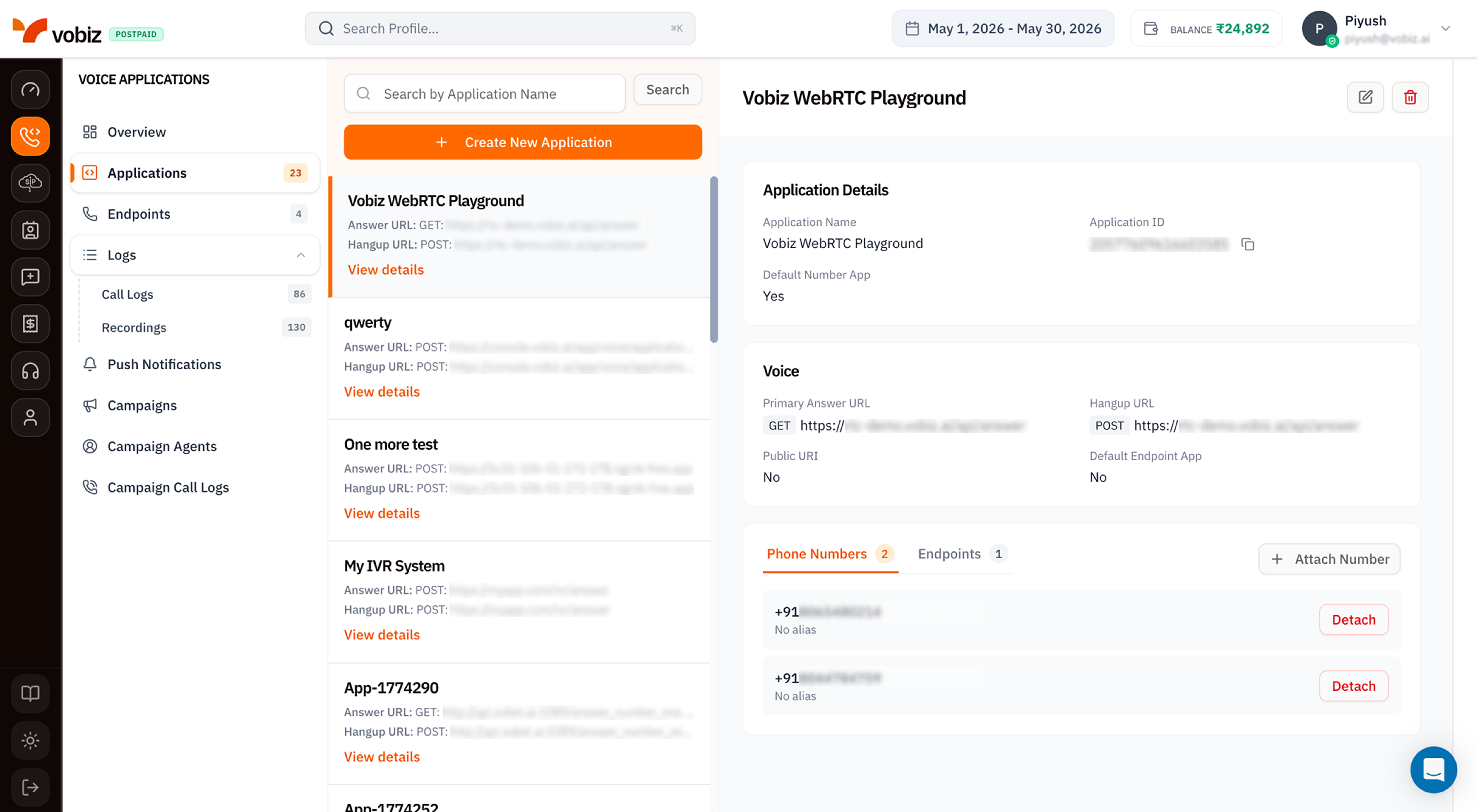
- Search + Create - filter the list by name, or click + Create New Application to open the creation form.
- App list - every app on your account. Each card shows the Answer URL, Hangup URL, and a View details link.
- Application Details panel - the right side updates when you click a card.
What the details panel shows
| Field | Meaning |
|---|---|
| Application Name | The friendly name you typed at creation. Edit any time via the pencil icon. |
| Application ID | The immutable identifier - quote this when filing support tickets and use it as the application_id in REST API calls. |
| Default Number App | Yes means any phone number that isn’t explicitly attached to another app will fall back to this one. Useful for “catch‑all” routing. |
| Primary Answer URL | Method + URL Vobiz calls when an inbound call needs handling, or when an outbound API call has no inline XML. |
| Hangup URL | Method + URL Vobiz POSTs the final call result to. |
| Public URI | If Yes, the answer URL is reachable from the public internet - Vobiz can deliver calls. Toggle to No to disable the app without deleting it. |
| Default Endpoint App | Yes means SIP endpoints without an explicit app assignment use this one. |
- Phone Numbers - every DID attached to this application. Click + Attach Number to add more, or Detach to release one.
- Endpoints - SIP endpoints (softphone logins) routed to this application.
Create an XML Application
Click + Create New Application to open the side panel.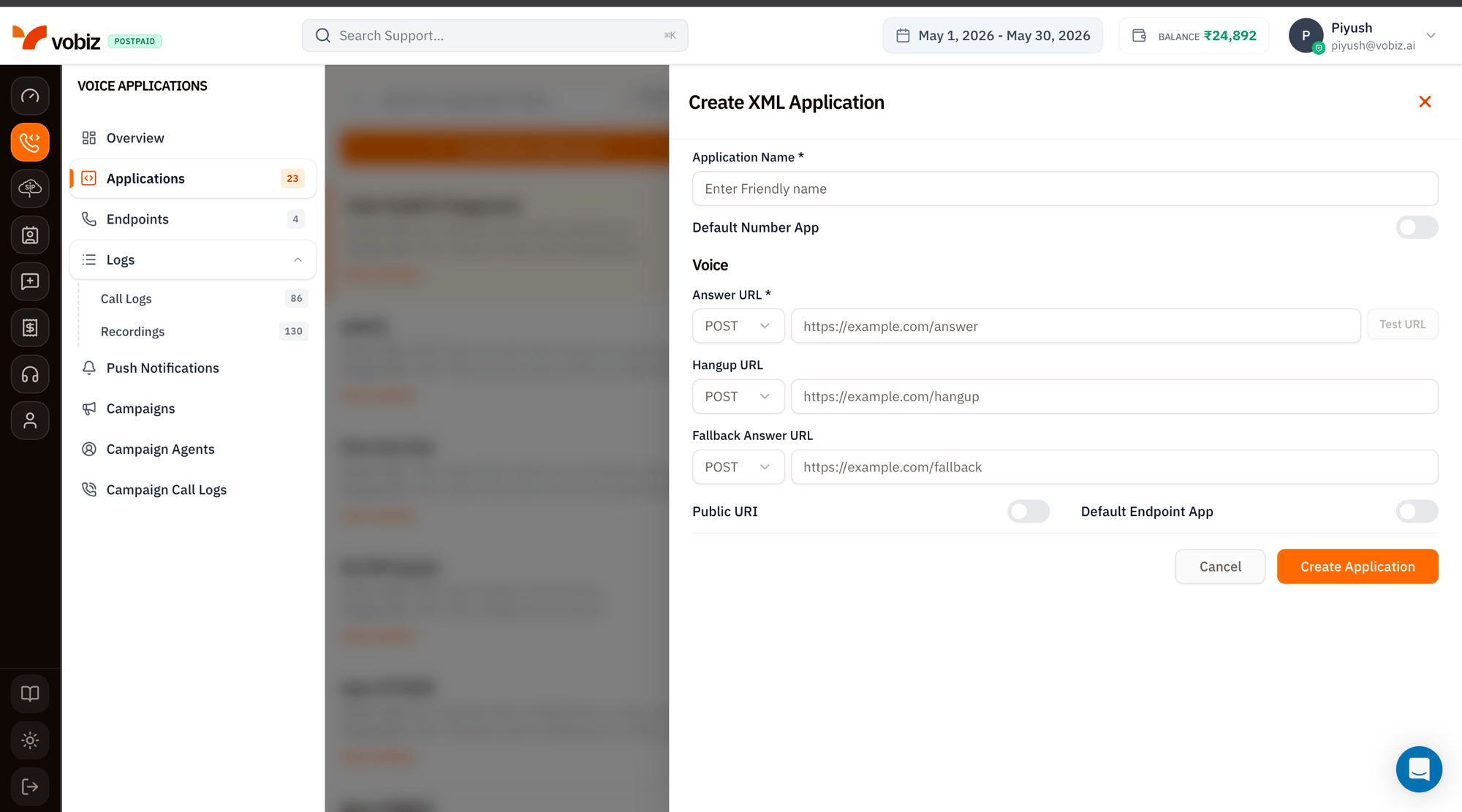
| Field | Required | Notes |
|---|---|---|
| Application Name | ✅ | A human label like “Inbound IVR” or “Outbound Survey”. |
| Default Number App | – | Toggle on to make this the catch‑all for unassigned numbers. |
| Answer URL | ✅ | POST (recommended) or GET. Click Test URL to send a sample payload and verify your server responds with valid XML. |
| Hangup URL | – | Optional but strongly recommended - most CDR analytics depend on it. |
| Fallback Answer URL | – | If your primary URL returns 5xx or times out, Vobiz tries this one before failing the call. |
| Public URI | – | Toggle on if your server is publicly reachable. |
| Default Endpoint App | – | Toggle on to make this the default for SIP endpoints. |
Attach phone numbers
The final step of the create flow (and a separate + Attach Number action on existing apps) opens the Attach Phone Numbers to Application view.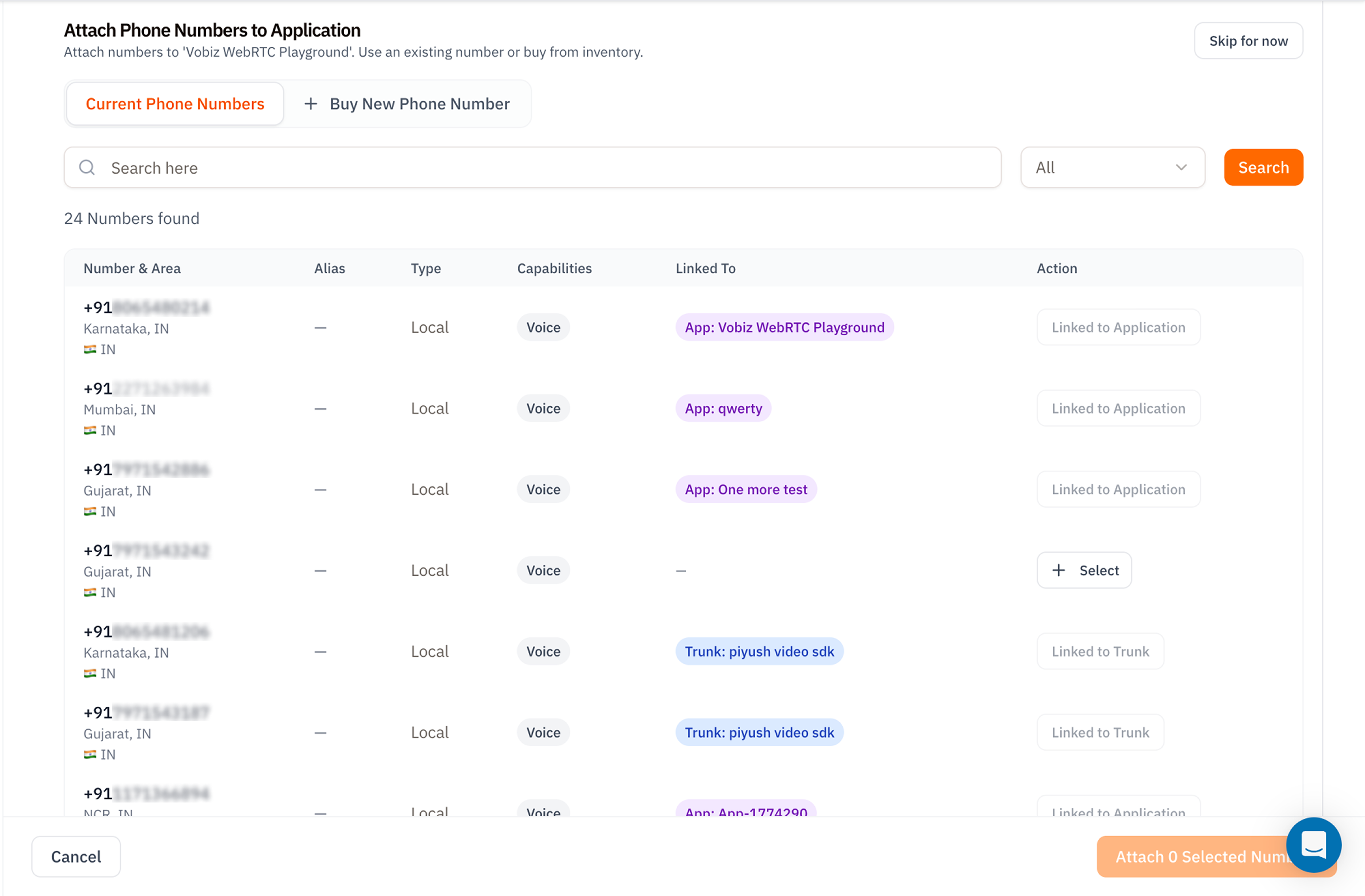
- Current Phone Numbers - every DID on your account. The Linked To column shows where each number is currently routed (another App, a Trunk, or unassigned). Only numbers with no link or those linked to this app can be selected.
- Buy New Phone Number - opens the DID purchase flow without leaving this dialog.
Edit, delete, and disable
The two icons in the top‑right of the details panel:- ✏ Edit - opens the same form you used to create the app. URLs, name, and toggles can all change.
- 🗑 Delete - permanently removes the app. Any attached numbers fall back to the default number app (or stop receiving calls if no default is set).
Tips
- Keep one Default Number App that points to a small “this number is unconfigured” handler - newly purchased numbers will route there until you wire them up.
- Use a Fallback Answer URL in production. A 502 from your primary handler is rare, but when it happens you want graceful XML, not a SIP error.
- The Application ID is the canonical handle for API access - store it in your
.envrather than the name.
What’s next
SIP Endpoints
Sign softphones into your app for click‑to‑call testing.
XML Reference
Every supported XML verb with examples.